First Robotics Competition Robot(s)
I served as one of the captains of my high school’s FIRST Robotics Competition (FRC) team, SMBLD 3020, during the 2022 season. The project spanned from January to May 2022 and involved the design, fabrication, and integration of multiple robot subsystems under intense time constraints.
During the season, I led the design and development of both the intake and storage subsystems. The intake subsystem was responsible for rapidly acquiring 24 cm diameter game pieces. Although this subsystem was not initially my primary assignment, our team experienced a major failure at our first competition. With only one week before the next tournament, I took ownership of redesigning the intake system from the ground up.
I completed the new intake design in just two days! The system incorporated pneumatics, polycarbonate plates, flywheels, and hex shafts. Pneumatics allowed the intake to remain within the robot’s frame perimeter before deployment and extend outward once the match began. In designing the intake, I learned mathematical approaches for designs, such as angular velocity. Manufacturing the subsystem presented significant challenges due to broken equipment, including the mill and CNC machine, as well as complex geometries and limited tooling. To meet the deadline, I organized a full-team effort, involving newer members and JV students. We used full-scale printed drawings as templates for hand-fabricating flat plate components. Despite the setbacks, the subsystem was completed only two days after finalizing the design, giving our programmer just enough time to recalibrate and update the code before the competition.
My primary responsibility at the start of the season was the storage subsystem, a tall, internally mounted mechanism composed of belts, gears, fiberglass, and hex shafts. The structure was made entirely of carbon fiber, which was a defining feature of our robot. Carbon fiber layups were my technical specialty, and our extensive use of this material set us apart from most other FRC teams. The lightweight yet rigid construction gave our robot a significant advantage in defensive gameplay. The design required careful belt-tooth calculations and extensive testing to optimize ball compression, friction, and reliability.
In addition to subsystem design, I worked closely with other leaders to ensure seamless integration with the drivetrain, shooter, and arm mechanisms, balancing mechanical constraints, performance goals, and competition rules.
Lastly, I have noted some pictures from my 2020-2021 FRC robot to showcase how we were able to get a robot done while also recovering from COVID. After that year, I realized that even during a global pandemic, I would do what it takes to get a project done with passion. In this project, I 3D designed the shooter as well as helped manufacture several parts of the robot.
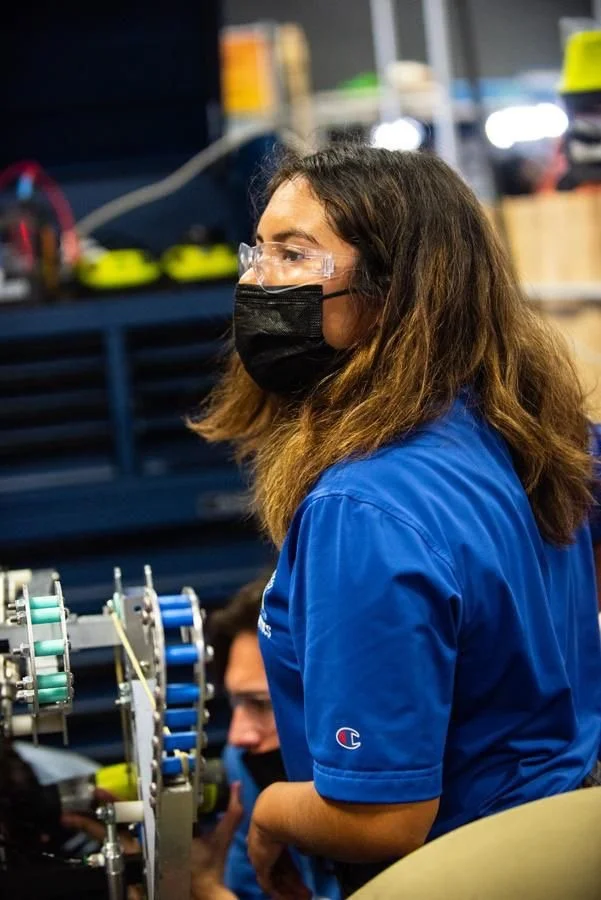
Working on My Intake
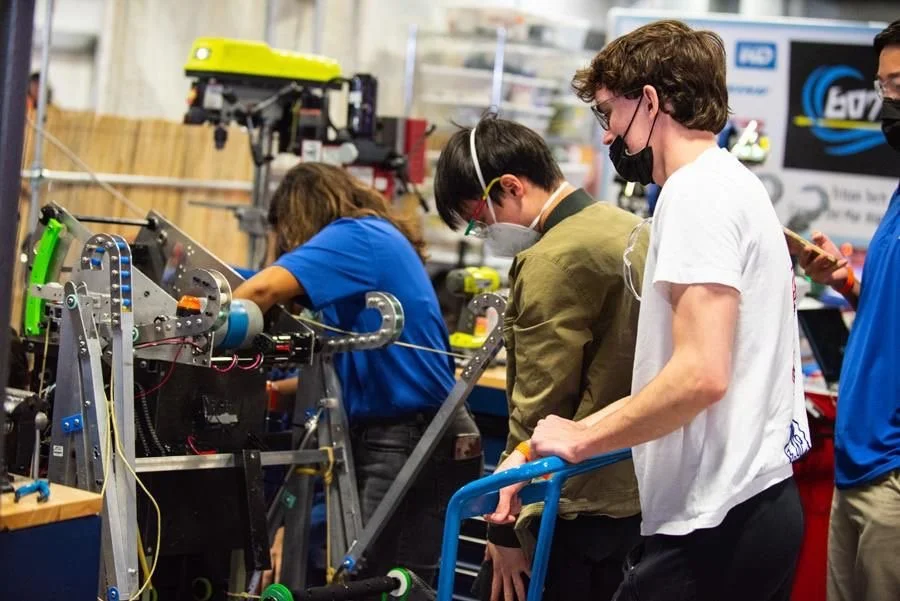
Shooter Maintenance
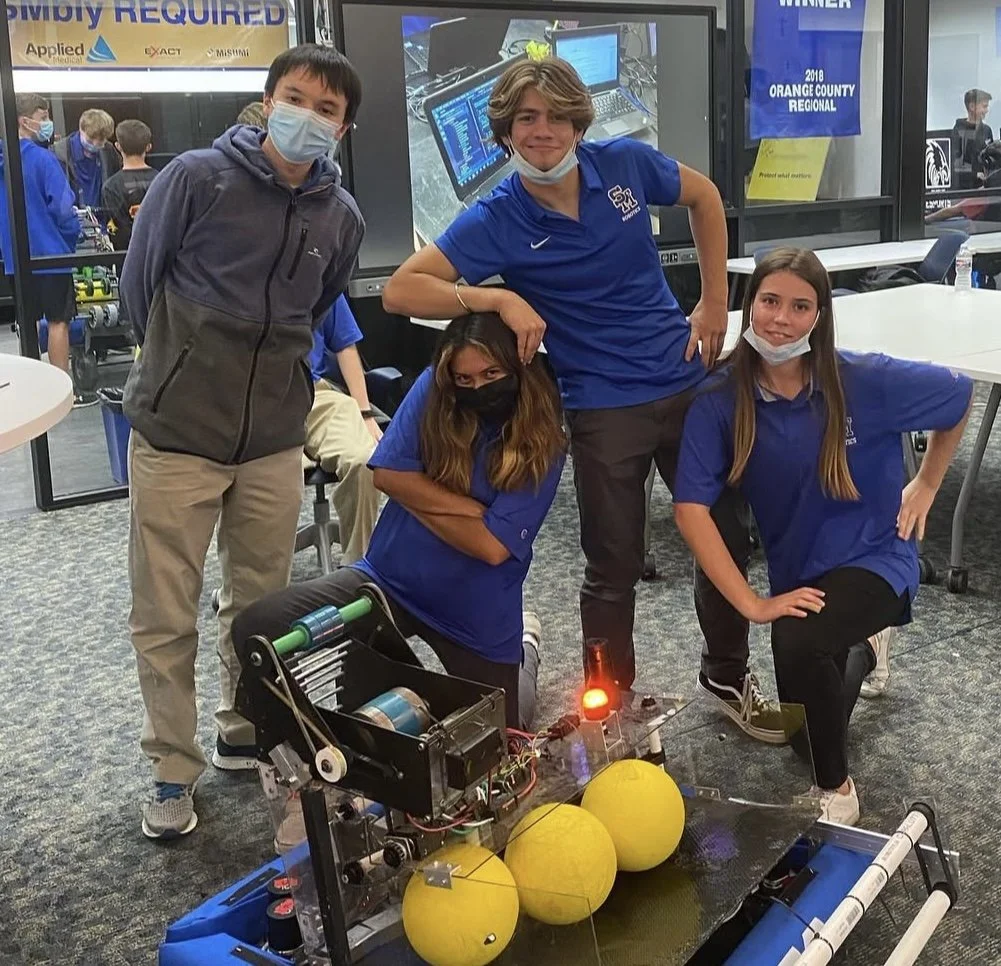
Junior Year Robot with Classmates
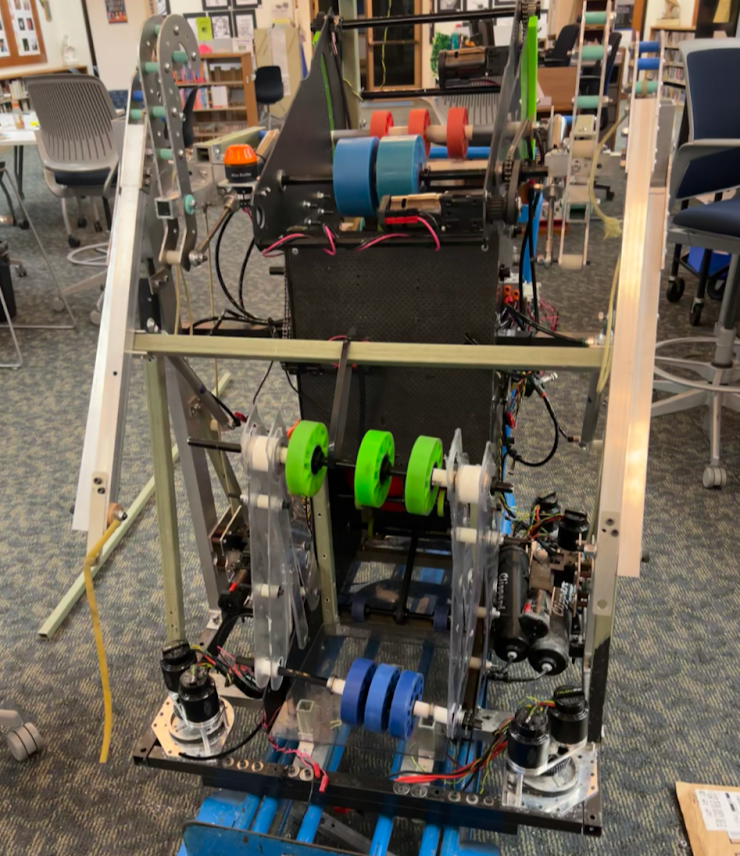
Senior Year Robot
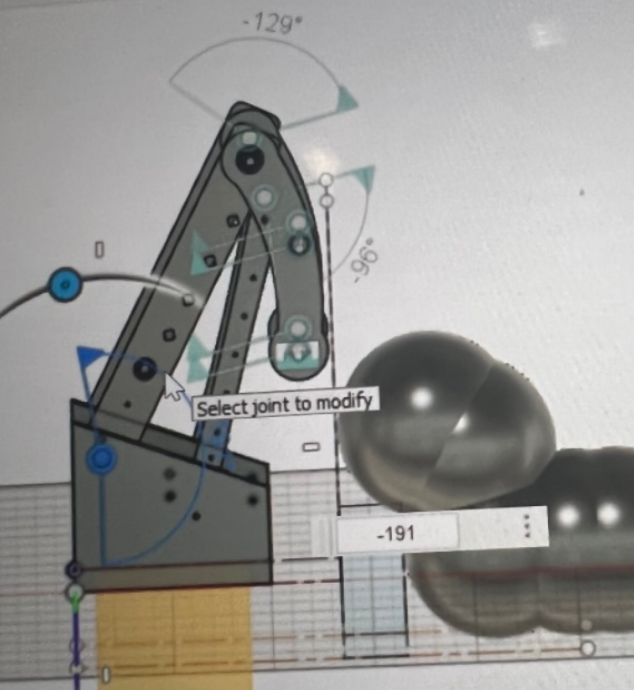
CAD of Senior Year Intake
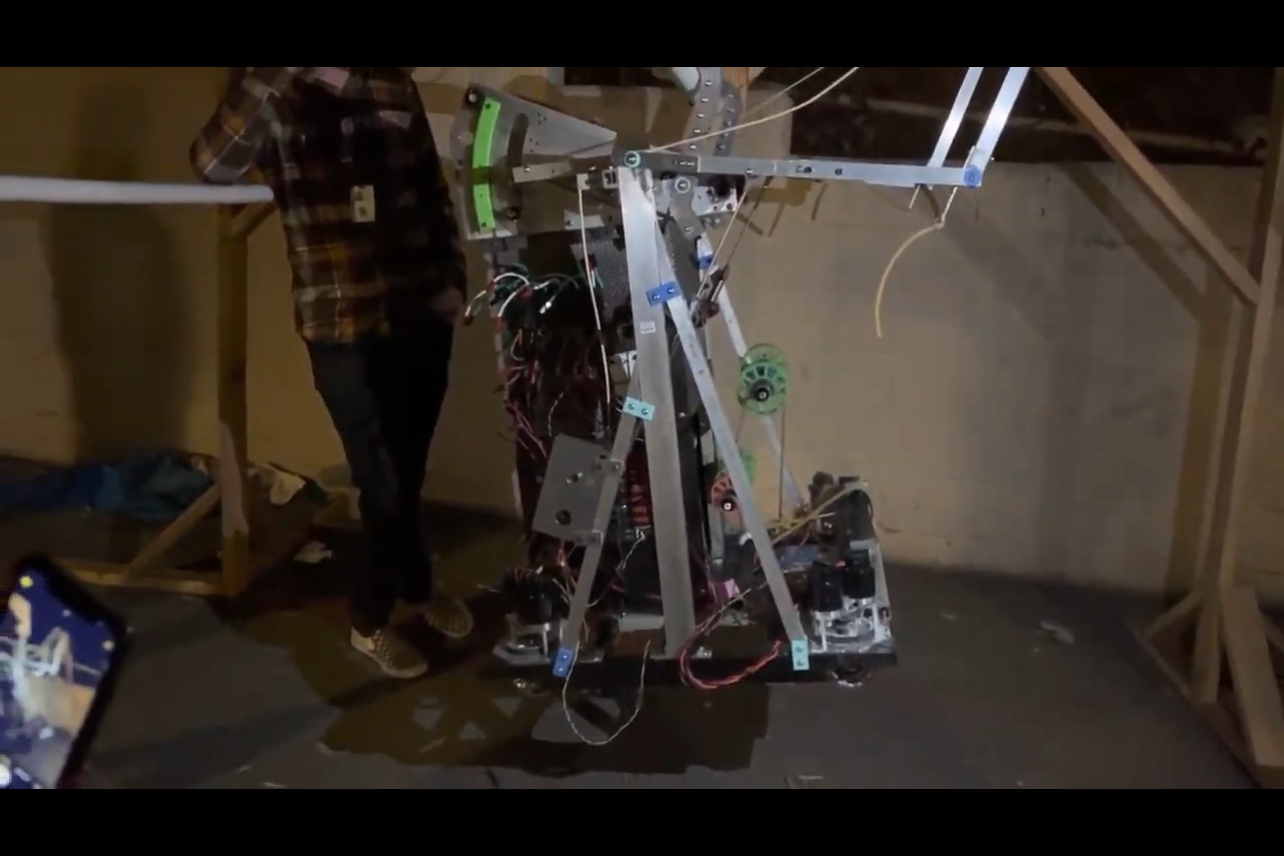
Robot Hanging Test
Shooter and Tower Integration Test
Pulley and Friction Test